
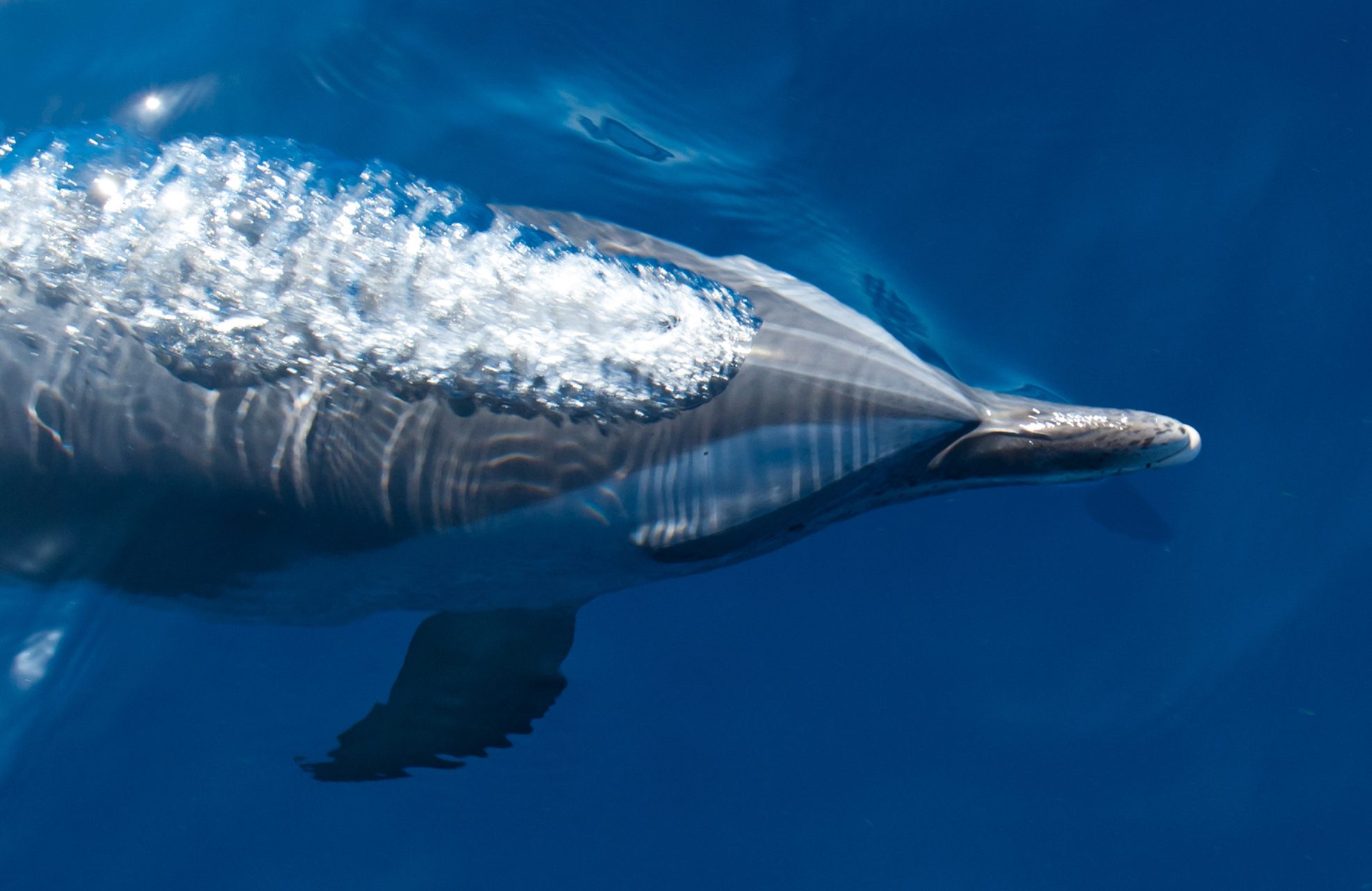
A recent study has unveiled a deeply troubling discovery: dolphins are exhaling microplastics through their blowholes. Breath samples collected from wild bottlenose dolphins in Florida and Louisiana revealed microplastic particles, including polyethylene and polyester, raising new alarms about the pervasive reach of human pollution.

Only visible under microscope, plastic microfibers found in dolphin exhalations are 14 times smaller than a strand of hair. (image credit: Miranda-Dziobak, College of Charleston)
These findings hit close to home for Sea Shepherd and our mission. Our campaigns have long confronted the dangers of plastic pollution in marine habitats, exposing how discarded waste disrupts delicate ecosystems and endangers marine life. This new evidence underscores an even more insidious threat—the unseen, airborne spread of microplastics that infiltrate the very breath of ocean creatures.
Microplastics not only accumulate in the water but also linger in the air, further affecting marine mammals like dolphins that rely on deep, powerful breathing. The potential for lung damage and inflammation is real, pointing to yet another consequence of unchecked human activity.

Read the full Research Article by Miranda K. Dziobak, Andreas Fahlman, Randall S. Wells, Ryan Takeshita, Cynthia Smith, Austin Gray, John Weinstein, and Leslie B. Hart on PLOS ONE.
SUPPORT SEA SHEPHERD’S MISSION
At Sea Shepherd, we recognize that defending ocean health means addressing all forms of pollution, from ghost nets to the microplastics too small to see. Our work, whether through direct action campaigns or awareness initiatives, aims to force illegal and inhumane practices into the spotlight and inspire concrete changes to safeguard marine ecosystems.
As guardians of marine life, we are more committed than ever to reducing the impact of microplastics. This discovery is not just a revelation—it’s a rallying cry. We invite you to join our mission: from supporting our pollution clean-up efforts to advocating for stricter regulations on plastic production and disposal. Together, we can fight for a future where dolphins and all marine life can live without breathing in our waste.
