
[GRAPHIC CONTENT WARNING]
The fight to protect marine mammals from brutal hunting practices continues across Europe. Iceland and the Faroe Islands, two regions steeped in whaling and cetacean hunting traditions, have come under international scrutiny as their actions stand in stark contrast to global conservation efforts.
Iceland’s Whaling Crisis
Iceland’s last remaining whaling company, Hvalur hf., has faced growing criticism after resuming fin whale hunting. Despite public outcry and reports of unnecessary suffering during hunts, Iceland has been reluctant to permanently revoke the company’s license. Animal welfare advocates argue that the hunting methods—using explosive harpoons—are inhumane, causing prolonged agony for the whales.
Environmental groups, including Sea Shepherd, are calling on Iceland’s President to take a stand. With the global fin whale population struggling to recover from decades of overhunting, this is not just an Icelandic issue—it’s a matter of preserving biodiversity for future generations.

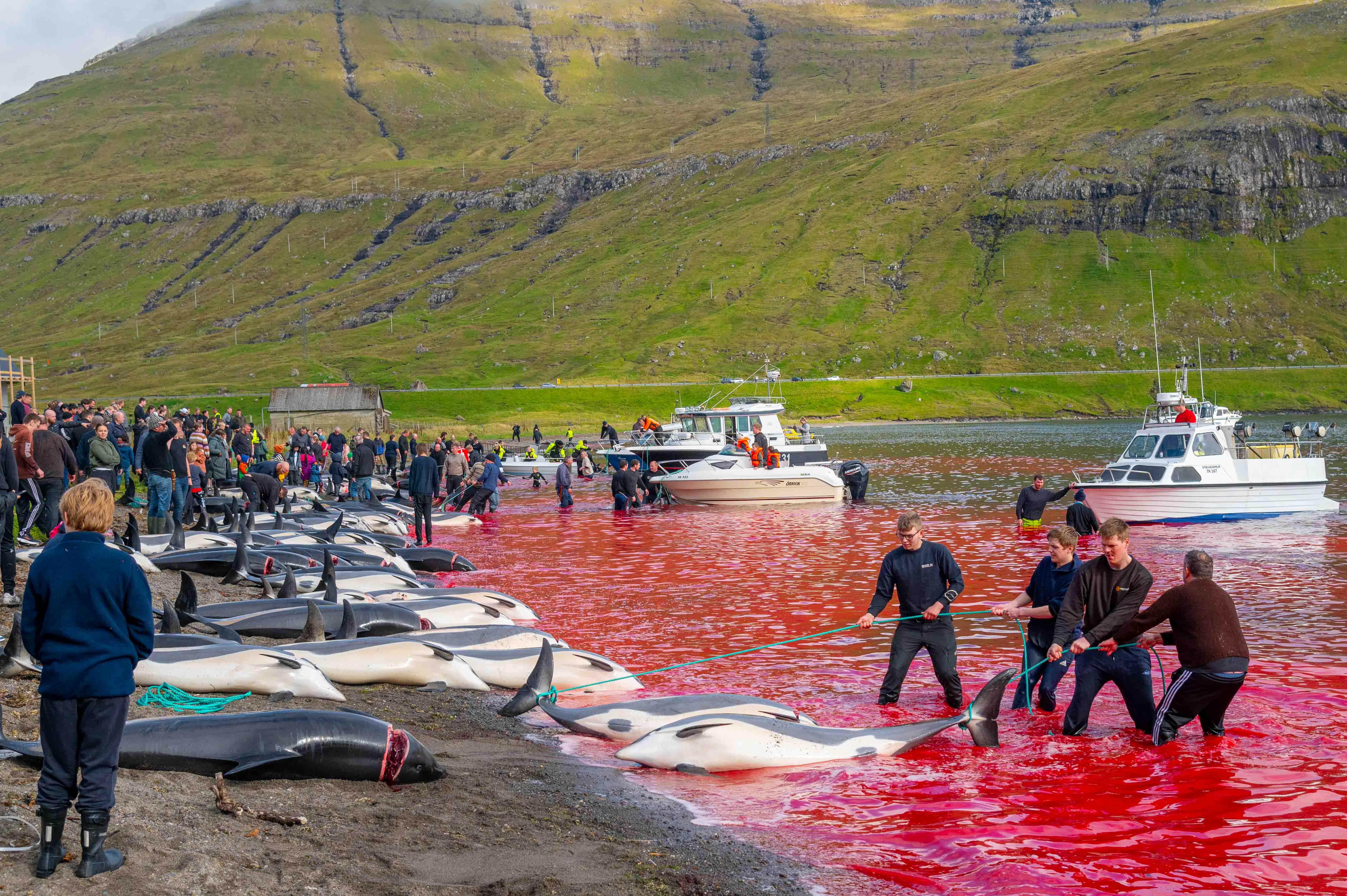
On average, nearly a thousand whales and dolphins are needlessly slaughtered in the Faroe Islands.
The Grindadrap: A Tradition Under Fire
While Iceland grapples with whaling, the Faroe Islands persist with the Grindadrap, an annual hunt that targets pilot whales and white-sided dolphins. In 2024, nearly 750 cetaceans were slaughtered, including calves barely weaned from their mothers. The hunts are framed as cultural tradition, yet their necessity is increasingly questioned as the global movement against animal cruelty grows louder.
Sea Shepherd has been on the front lines documenting and exposing the Grindadrap for decades. Our team’s footage of these hunts has sparked international outrage, shining a light on the brutal methods used to corral and kill these intelligent, social animals.
Why These Hunts Continue
Both Iceland and the Faroe Islands argue that their practices are cultural traditions. Yet, as global conservation efforts advance and marine ecosystems face mounting threats from pollution and overfishing, such justifications lose credibility. The international community has a moral obligation to question and challenge these practices.

Newborn calves are not spared from this bloody tradition
Sea Shepherd’s Mission
Sea Shepherd remains focused on in its nearly half-century long mission to protect marine wildlife. In the Faroe Islands, we work to document the Grindadrap and bring its horrors to the world stage, and advocate for changes in policy. In Iceland, we stand with other conservationists calling for an end to whaling once and for all. Our presence—on the water and through global advocacy—continues to force these issues into public consciousness.
But we can’t do it alone.
Join Us In The Fight
Every whale and dolphin saved is a victory for our oceans, but the fight is far from over. You can help end these inhumane practices by supporting Sea Shepherd today. Your donation powers the ships, crews, and technology we need to stay on the front lines, confronting and exposing these brutal traditions.
