
Submit Your Public Comment to NOAA by May 5th
Before you speak up, take a moment to get informed. The details matter — and so does your voice. Read this article to understand exactly what’s at stake for gray whales, and then use NOAA’s public comment portal to tell them this hunt must be denied. We need every voice to defend vulnerable marine life before the May 5 deadline.
Whaling in the Pacific Northwest Must Stay in the Past
Sea Shepherd strongly opposes the application submitted by the Makah Tribe for a permit to hunt Eastern North Pacific gray whales. We call on the National Marine Fisheries Service (NMFS) to deny the request. This hunt is not necessary, not humane, and not supported by current science. We are not questioning the cultural identity of the Makah people—we are demanding accountability from NMFS, which is legally bound to uphold the Marine Mammal Protection Act (MMPA). The agency cannot approve this permit without violating the very law and regulations it exists to enforce.


This Isn’t Subsistence—It’s Symbolism Masquerading as Need
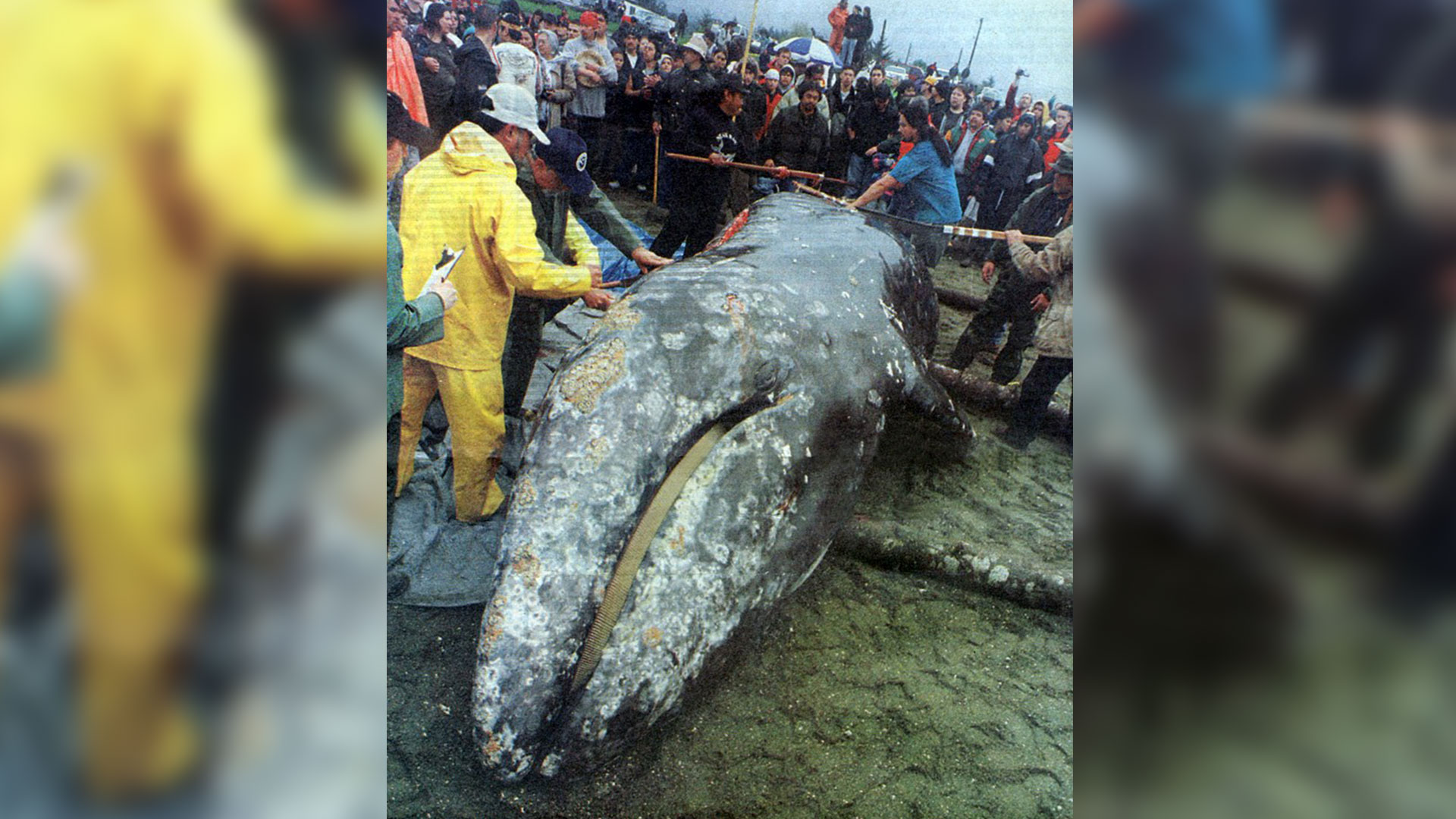
The Makah voluntarily stopped hunting whales in the 1920s. They have since survived and evolved—like all cultures do—without taking another whale until one hunt in 1999. Now, 25 years later, the tribe seeks to revive this tradition. The problem? The numbers just don’t add up.
This application fails to demonstrate a nutritional or survival-based subsistence need. Data from the last hunt shows that only 63% of homes received any whale meat, and less than half received blubber. Even if a whale is killed, the per-person yield for interested tribal members would be a mere two to four pounds of meat. That’s not subsistence—that’s ceremonial. Traditions matter, but ceremonial killing cannot override whale conservation and compliance with regulations designed to protect these animals.
The Biological Risk Is Real—and Unacceptable
Perhaps most alarming is that the whales at risk are not just any gray whales—they’re from the Pacific Coast Feeding Group (PCFG), a smaller and feeding subgroup. NMFS regulations require a minimum population of 192 whales to issue a permit. The most recent estimates—years out of date—hover slightly above that number. But they fail to account for the Unusual Mortality Event (UME) declared in 2019, during which dozens of PCFG whales died. If even a portion of those deaths were from the PCFG population, current numbers would fall below the threshold. NMFS has no scientific basis to claim otherwise.
The Hunt Is Cruel by Design
In 1999, it took eight minutes, three harpoons, and four gunshots to kill a gray whale. In a rogue 2007 hunt, the whale took nine hours to die after being struck with at least 16 bullets. There is no justification for this kind of suffering.
The Makah plan to use harpoons and high-powered rifles aimed at the brainstem—despite lacking clear anatomical landmarks to guide them. This is not quick. This is not clean. This is not humane. And yet the regulations don’t even allow NMFS to revoke the permit if the methods prove inhumane—only after whales have already suffered and died.


NOAA Must Stand Up and Say No
The Marine Mammal Protection Act was designed to prevent exactly this scenario: small, vulnerable populations of marine mammals being hunted for reasons that cannot be justified. The Makah’s treaty rights are real and deserve respect—but they do not override conservation law and regulations. This application fails to meet multiple regulatory requirements, including population sustainability and humane methods.
Sea Shepherd respects cultural heritage. But killing endangered or vulnerable marine mammals—especially when that killing is neither necessary nor humane—is not cultural preservation. It’s ecological destruction.
NMFS must uphold the law. The permit must be denied. Sea Shepherd urges all supporters to speak up during this public comment period, which ends May 5.
Submit your formal comment, and let NOAA know that this hunt has no place in modern society.
Join The Fight
And if you believe in our mission to defend marine life and uphold conservation law, your donation keeps us in the fight — from policy pressure to frontline action.
Choose how you want to support Sea Shepherd:


