
The vaquita porpoise, the world’s rarest marine mammal, has been pushed to the brink of extinction by illegal gillnets set for totoaba fish. Totoaba’s swim bladder, sold in Asian markets for thousands of dollars per kilo—more valuable than cocaine—has fueled organized trafficking in the Upper Gulf of California. Each net set for this trade becomes a death trap for vaquita, leaving only a handful surviving in the wild.

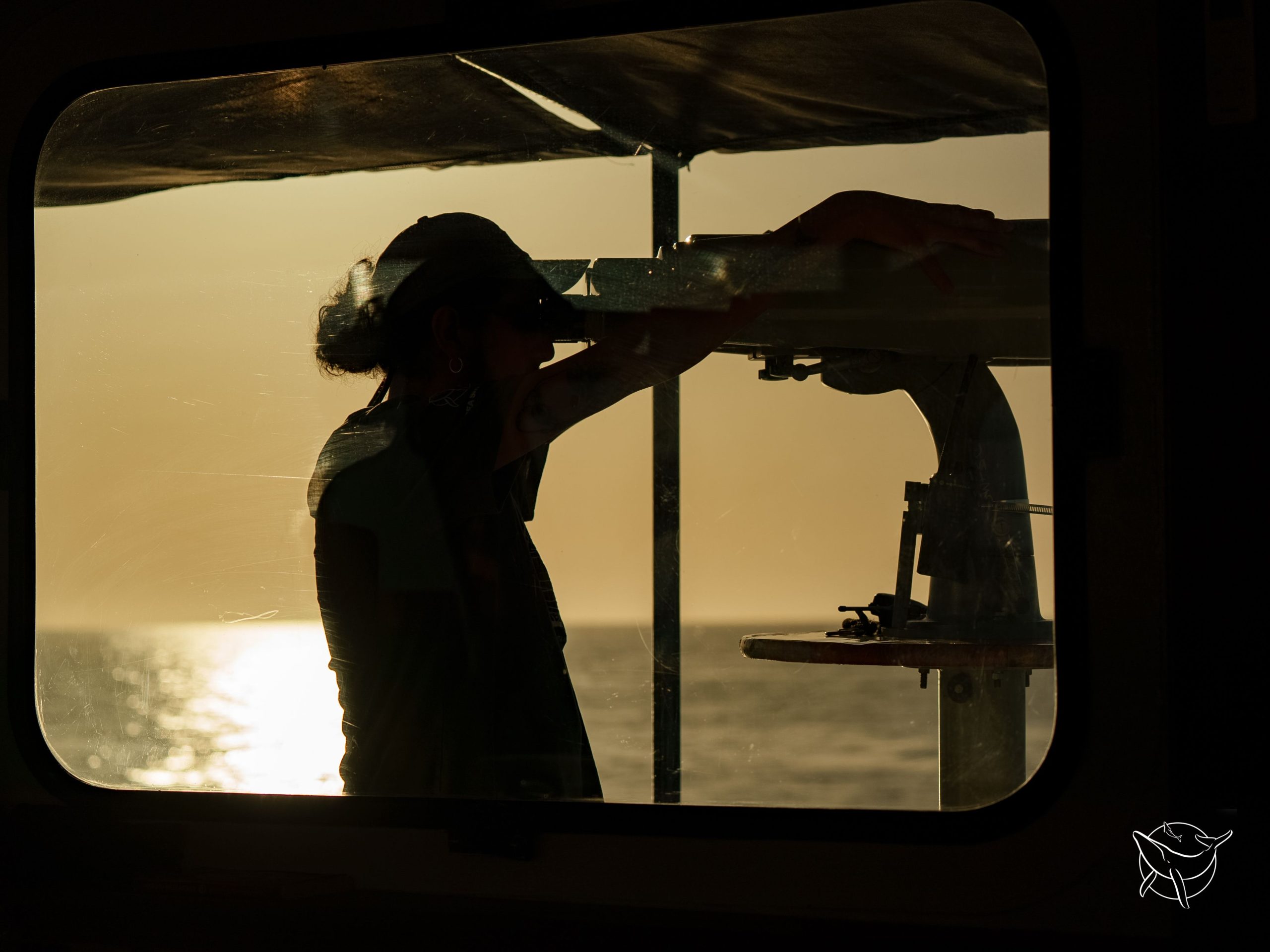
Each survey combines visual and acoustic science. From Sea Shepherd vessels, observers scan the horizon with large “Big Eye” binoculars and capture images of dorsal fins for individual IDs, while hydrophones below detect vaquita clicks. These recordings are reviewed every evening, guiding decisions about which areas should be scanned visually the next day. This integration ensures detections even in poor weather or when animals are submerged. Past surveys in the Zero Tolerance Area and surrounding habitat have brought together CONANP scientists, oceanographers like Gustavo Cárdenas-Hinojosa, PhD, Sea Shepherd’s Chief Scientist Andrea Bonilla and Marine Biologist Laura Sanchez, alongside an international team of marine mammal observers with more than 400 years of combined experience. The next survey begins this September, continuing this collaboration to track how vaquitas use the Refuge under current enforcement conditions.


How It’s Conducted
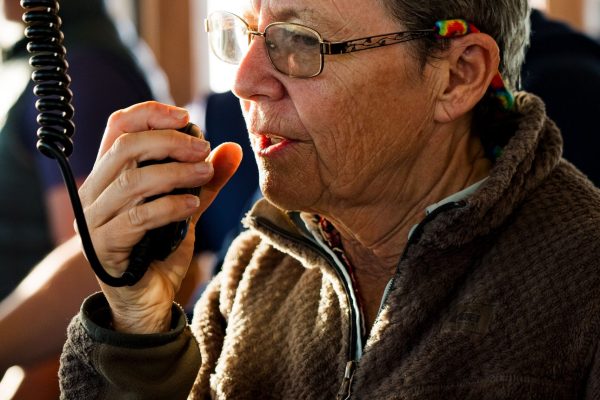
Each survey combines visual and acoustic science. From Sea Shepherd vessels, observers scan the horizon with large “Big Eye” binoculars and capture images of dorsal fins for individual IDs, while hydrophones below detect vaquita clicks. These recordings are reviewed every evening, guiding decisions about which areas should be scanned visually the next day. This integration ensures detections even in poor weather or when animals are submerged. Past surveys in the Zero Tolerance Area and surrounding habitat have brought together CONANP scientists, marine biologists like Gustavo Cárdenas-Hinojosa, PhD, Sea Shepherd’s Chief Scientist Andrea Bonilla and Marine Biologist Laura Sanchez, alongside an international team of marine mammal observers with more than 400 years of combined experience. The next survey begins this September, continuing this collaboration to track how vaquitas use the Refuge under current enforcement conditions.
Sea Shepherd’s Role
Sea Shepherd provides the survey’s operational backbone. Our ships supply the platforms, advanced radar and sonar, power, and safety for the scientific work, while our crews handle logistics at sea. Just as importantly, we remain in the Refuge year-round, monitoring illegal fishing with drones, radar, patrol boats, and other tools that are becoming increasingly vital to detection and deterrence. This constant presence generates a parallel dataset on fishing activity, allowing scientists to measure whether protections are being enforced, and whether they make a difference.
Why Year-Round Data Matters
Short surveys can only capture part of the story. By pairing seasonal scientific estimates with Sea Shepherd’s year-round monitoring, a clearer picture emerges: vaquita numbers stabilize when enforcement removes gillnets, and risk rises when illegal fishing returns. In 2024, observers recorded 6–8 vaquitas, including one healthy yearling but no calves, underscoring both the urgency of protection and the resilience of the species. With CONANP now expanding acoustic coverage through summer months, and Sea Shepherd supporting by helping to deploy and service these detectors, the survey is better equipped than ever to follow vaquita across their shrinking range.


What the Current Effort Looks Like
This year’s survey is a collaboration between international scientists, Mexican agencies, and Sea Shepherd crews. Barbara Taylor continues to guide the survey effort and provides scientific expertise, and CONANP leads expanded acoustic monitoring in the field. Sea Shepherd’s vessels keep the team at sea, working with the Mexican Navy to ensure safe operations and uninterrupted coverage in waters that remain dangerous due to illegal fishing.
The vaquita is still here, despite every prediction of extinction. Mothers swim with calves, and acoustic recorders continue to log their clicks. The vaquita survey proves survival is possible when gillnets are absent. With science, government action, and Sea Shepherd’s constant presence working in unison, protections on paper are being transformed into real chances for the world’s rarest porpoise.
Join the Fight
From surveys tracking the last vaquita to missions cutting deadly nets, Sea Shepherd is powered by people. Volunteers take the fight to the front lines—and monthly donors in our Direct Action Crew keep the ships moving. Stand with us.


