
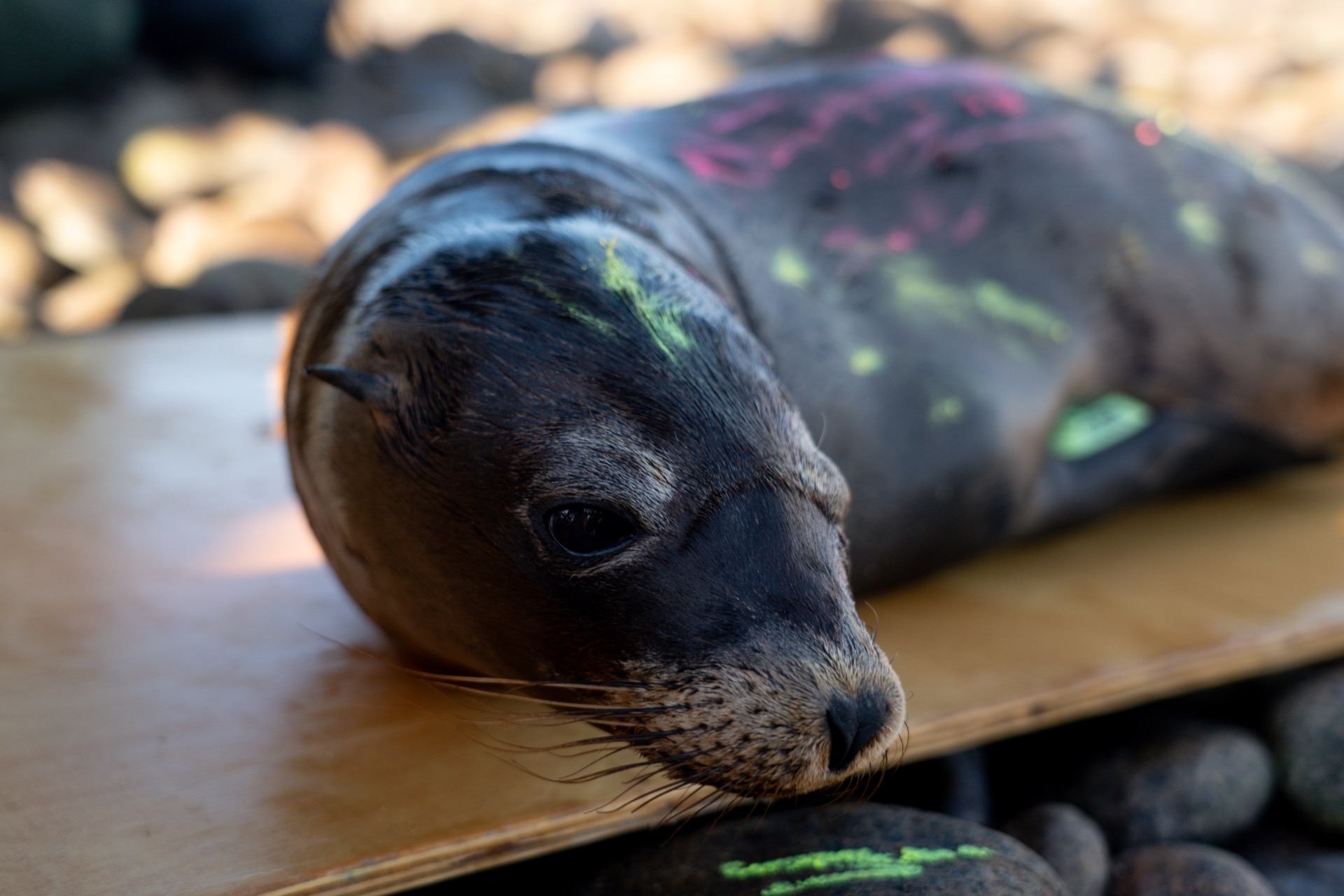
Gulf of California, San Jorge Island — Last week, Sea Shepherd Conservation Society participated alongside Mexican authorities and partner organizations in a major rescue effort at San Jorge Island that freed 13 California sea lions trapped in illegal fishing gear. The operation brought together PROFEPA (Federal Attorney for Environmental Protection), Cabet Cultura y Ambiente, Pesca ABC, and Grupo Lobos del Ejido Rodolfo Campodónico aboard Sea Shepherd’s vessel, the Seahorse.
The team rescued four juvenile females, three female pups, four juvenile males, and two male pups, each one pulled from a slow and painful death in abandoned nets. Many of these nets are believed to be remnants of the illegal totoaba trade, where the fish’s bladder is worth more than gold on the black market.
“These waters used to be filled with illegal nets and constant poaching,” said Heidy Martínez, Sea Shepherd’s marine biologist. “Now, after more than two years of consistent patrols and rescue work, we’re finally seeing real stability. That’s allowed us to expand our collaboration with teams like Rescate de Lobos, whose dedication has led to 107 sea lions freed so far. Together, we’re making it possible to protect more wildlife across the region.”


For years, the waters of the Upper Gulf of California were filled with death traps. Today, through cooperation with Mexico’s law enforcement and environmental agencies and the presence of Sea Shepherd’s vessels, those same waters are being defended in a way they never have been before.
The Bob Barker and Seahorse have transformed what is possible in the Upper Gulf. These vessels serve as mobile bases for cooperation, supporting scientists, rescue teams, and enforcement agencies working together to protect marine life. From detecting illegal activity and locating hidden nets to hosting operations like the recent Vaquita Population Survey, the ships provide the platform, technology, and stability needed for coordinated protection. By sharing these resources, Sea Shepherd has helped create a presence on the water that strengthens every effort to defend this critical ecosystem.
During patrols, our teams even spotted sea lions that had been rescued in past campaigns swimming freely and in excellent health. This is a powerful reminder of what persistence and partnership can achieve.


Next Mission: Consag Rock
Next week, the coalition will deploy to Consag Rock, another critical sea lion habitat within the Vaquita Refuge. There, more sea lions have fallen victim to the same illegal nets found around San Jorge. Launching once again from the Bob Barker, the team will continue to locate and remove these deadly traps, advancing the shared mission to protect life across the Upper Gulf of California.
Join the Fight
Trapped. Wounded. Fighting to survive. Help free sea lions from deadly nets—become a monthly defender today.
