
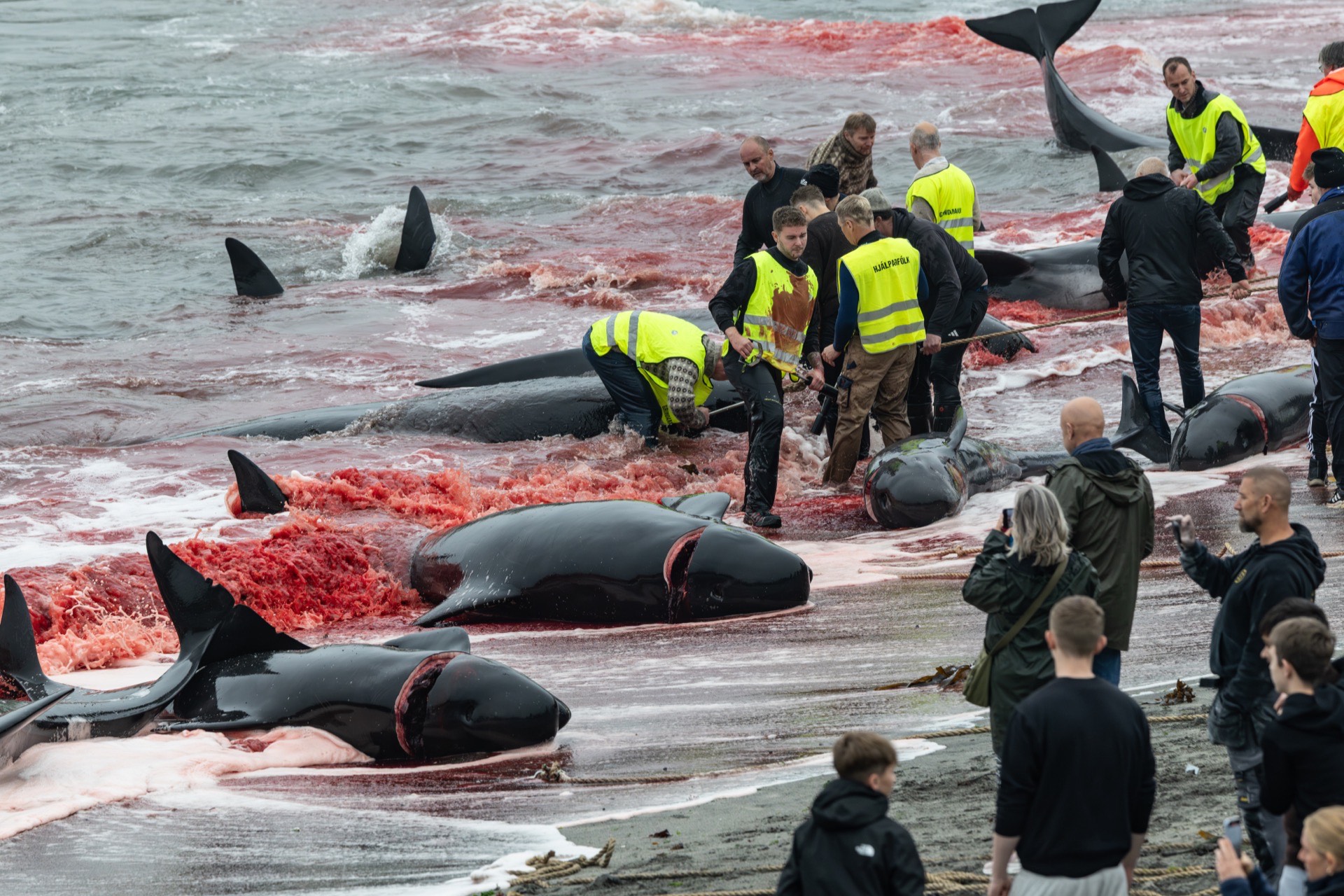
Warning: Graphic Images Below
For decades, the grindadráp has been framed as beyond challenge. Within the Faroe Islands, the hunt is often presented as universally supported, deeply cultural, and closed to debate. International condemnation exists, but meaningful internal discussion has long been constrained.
For many Faroese who oppose the hunt, speaking publicly comes with real consequences. Social pressure, professional risk, and fear of backlash have kept dissent quiet, distorted, or pushed to the margins.
This is what makes a recent podcast conversation so significant. Featuring Sea Shepherd Faroe Islands campaign director Valentina Crast, the episode offers a rare account of what it means to challenge the hunt from within a small, tightly knit society — and why so many opposing voices remain unheard.

Valentina explains that the perception of unanimous support masks a far more complicated reality. Many Faroese oppose the grindadráp, but the space for open, democratic conversation has been systematically narrowed.
But it is not safe for them to speak.
In a small society like this, that pressure is incredibly effective.”
The podcast conversation sits alongside reporting by Oceanographic Magazine, documenting how dissent is suppressed and how criticism is often met with intimidation. Together, the article and the podcast form a parallel examination of the same problem from different angles: one through investigative reporting, the other through lived experience.
The timing of this conversation matters. In late 2025, Faroese authorities filed animal cruelty charges related to a 2024 hunt in which hundreds of whales were killed and surviving animals were left trapped in a bay for more than twenty four hours. It marked the first time such charges had ever been brought in connection with the grindadráp.
“This kind of legal action has never happened before,” Valentina explains. “It was unexpected, and it forced a conversation that Faroese society has struggled to have openly.”


Images from recent grindadráp hunts in the Faroe Islands.
This case has halted hunts in the northern islands of the Faroe Islands and exposed cracks in a system that has long resisted scrutiny. While the pause is temporary, it demonstrated that the hunt is not immune from accountability, despite decades of political sensitivity and silence.
Sea Shepherd has worked in the Faroe Islands for decades, documenting hunts and challenging misinformation through nonviolent and lawful means. Our approach today focuses on transparency, documenting all aspects of the hunt, and supporting Faroese people who want the freedom to speak without fear.
“For as long as they are not allowed to have a democratic conversation themselves,” Valentina says, “we will keep the conversation alive.”
This podcast episode offers rare insight into why the grindadráp has remained so difficult to challenge and why continued international attention remains essential. We encourage supporters to listen to the full episode and to read the Oceanographic Magazine investigation, which provides additional reporting and context on this pivotal moment.
Breaking the Silence in the Faroe Islands
Long hidden realities are coming into view, creating space for accountability, scrutiny, and open discussion around the grindadráp.


