
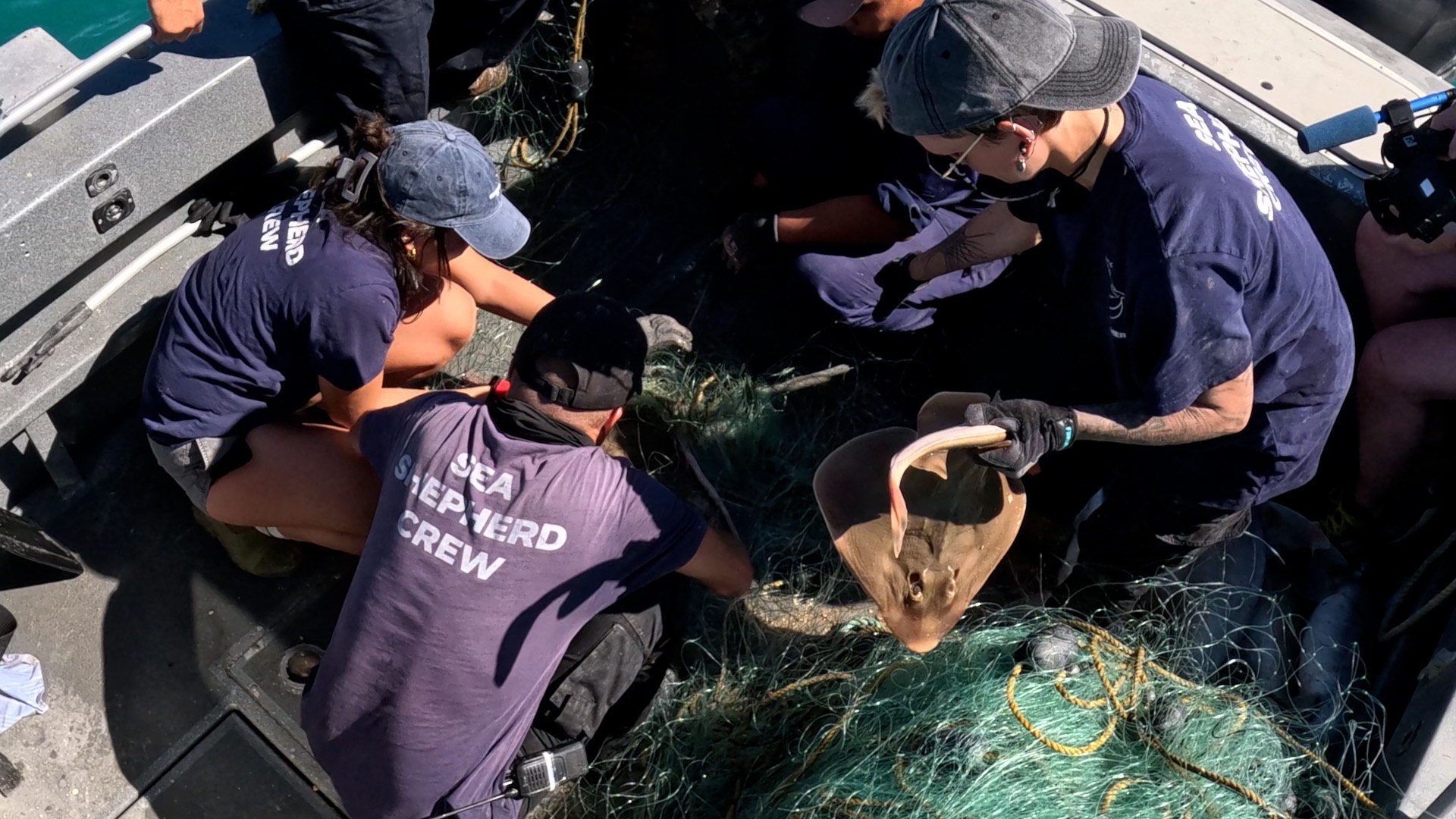
It is totoaba season in the Upper Gulf of California, the period each year when illegal fishing pressure intensifies and gillnets pose the greatest threat to the critically endangered vaquita porpoise and other marine species in the region. The most direct way to defend the vaquita is to eliminate nets from the water.
Over the past decade, Sea Shepherd’s role in the Upper Gulf has evolved from emergency net retrieval to active deterrence and rapid response. What began as large-scale cleanup operations has developed into a coordinated, permanent enforcement presence inside the Zero Tolerance Area, working alongside Mexican authorities to detect, document, and remove illegal activity before it can escalate.
Last week that system was tested on consecutive days.
Panga Detained Inside the Zero Tolerance Area
During a morning patrol on February 7th, Sea Shepherd’s drone team detected a fishing vessel operating deep inside the Zero Tolerance Area. A panga was observed near the center of the refuge actively retrieving a recently deployed net.
Aerial footage confirmed the violation and was transmitted in real time to Navy inspectors onboard. Mexican authorities responded quickly. An enforcement vessel arrived and escorted the panga to port to begin formal proceedings and sanctions.
According to inspectors, the vessel, its engines, and its fishing gear are expected to be seized.
Back-to-Back Major Net Recoveries
The following day, crews located and removed a drifting shrimp gillnet more than 800 meters long inside the protected zone. A total of 697 animals were found entangled. 426 were saved. 271 were already dead. The victims ranged across species including fish, sharks, rays, shrimp, and crabs, demonstrating the indiscriminate destruction caused by a single net left to drift.


On February 9, an active flounder net measuring 1,500 meters in length and 9 meters in depth was located just outside the refuge boundary. This was the longest net retrieved since M V Seahorse began operations inside the Zero Tolerance Area in 2023. Inside the net were sharks, rays, and flounders still alive but entangled and under severe stress.
Working alongside the Mexican Navy, Sea Shepherd crews cut into the net and began freeing animals one by one. In total, 146 sharks, rays, and flounders were disentangled and returned to the Gulf alive.
Together, these recoveries are a stark reminder of how massive the impact can be from just one illegal net and how quickly entire sections of the food web can be wiped out.
These actions reflect more than a decade of sustained effort in the Upper Gulf of California, where Sea Shepherd crews have removed hundreds of illegal nets from the vaquita refuge, helping lay the groundwork for the continuous federal enforcement presence now operating inside the protected area.
The same enforcement model is active beyond the Upper Gulf. Off the coast of the Yucatan at Scorpion Reef, a coordinated operation recently resulted in the seizure of more than 700 kilos of illegally caught fish. You can read about that action here.
From the Upper Gulf to Scorpion Reef, Sea Shepherd works alongside Mexican authorities to confront poaching directly and protect marine wildlife in the waters where it is under the greatest threat.
Defending the Vaquita Refuge
Illegal gillnets threaten the last remaining vaquita and countless other marine species. Monthly support keeps patrols active and nets out of the water where protection makes the difference.


