
Sea Lions & Seals
By Heidy Martinez, Sea Shepherd Biologist
Roca Consag is the only island in the vaquita refuge, home to a colony of California sea lions living in the same waters where gillnets continue to kill indiscriminately.
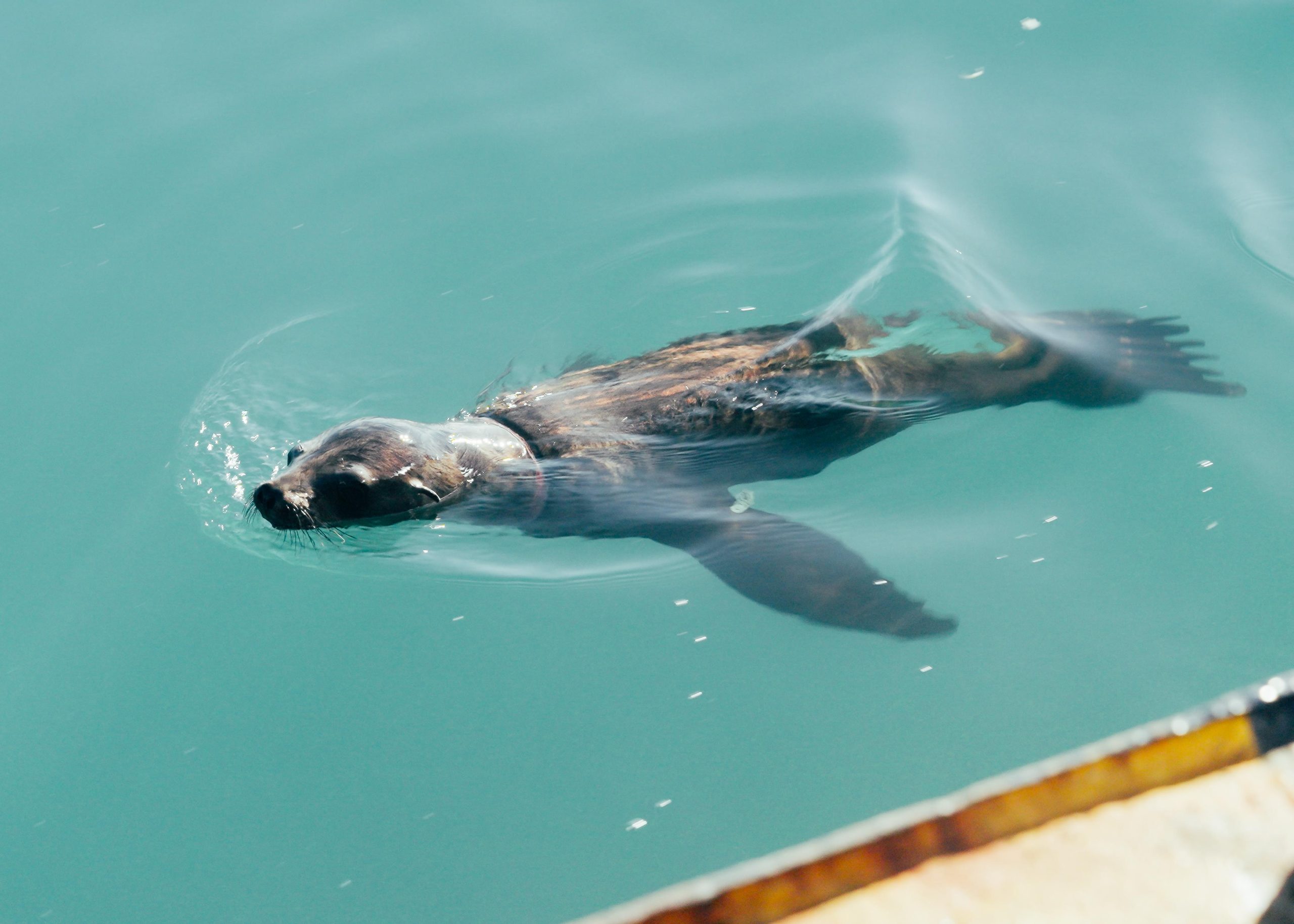
We found Chuck there with the net already deep in his neck. It had cut through the skin and the blubber and was starting to reach the muscle. Every movement tightened it. This only got worse, leading to a torturous death.
On March 21 at Roca Consag in Baja California, Mexico, the rescue was carried out alongside Pesca ABC, Rescate de Lobos Marinos and Mexican authorities.
We deployed from Sea Shepherd’s Vessel, Seahorse, to the island with a plan to bring Chuck back aboard. We located him in the colony and worked him out of the group. Once he moved clear, the team secured him with a hoop net and transported him back to the Seahorse.
On deck, we recorded standard measurements and observations. Chuck measured 133 cm and weighed approximately 40 kg, a male pup. He was tagged 31M for monitoring.


After being released back into the water, Chuck displayed unusual behavior. Sea lions will sometimes look back after being freed, but typically continue swimming away. Chuck did not. He turned around, returned to the vessel, and made contact with the ship.

In a year and a half working on these operations, it was the first time I had observed this. Even Diana, the senior veterinarian with significantly more experience, noted that she had never seen it before.
It was an emotional and unique moment for all of us, one that stood out among many rescues.
The operation was carried out in coordination with PROFEPA, Pesca Alternativa de Baja California, Cabet Cultura y Ambiente A.C., Grupo Lobos Campodónico, CONANP, and federal fisheries inspectors from the National Maritime Authority of the Secretariat of the Navy.
Protecting Sea Lions in the Gulf of California
Chuck is one of 81 sea lions rescued across seven disentanglement campaigns. Monthly support makes rescues like this possible.
