
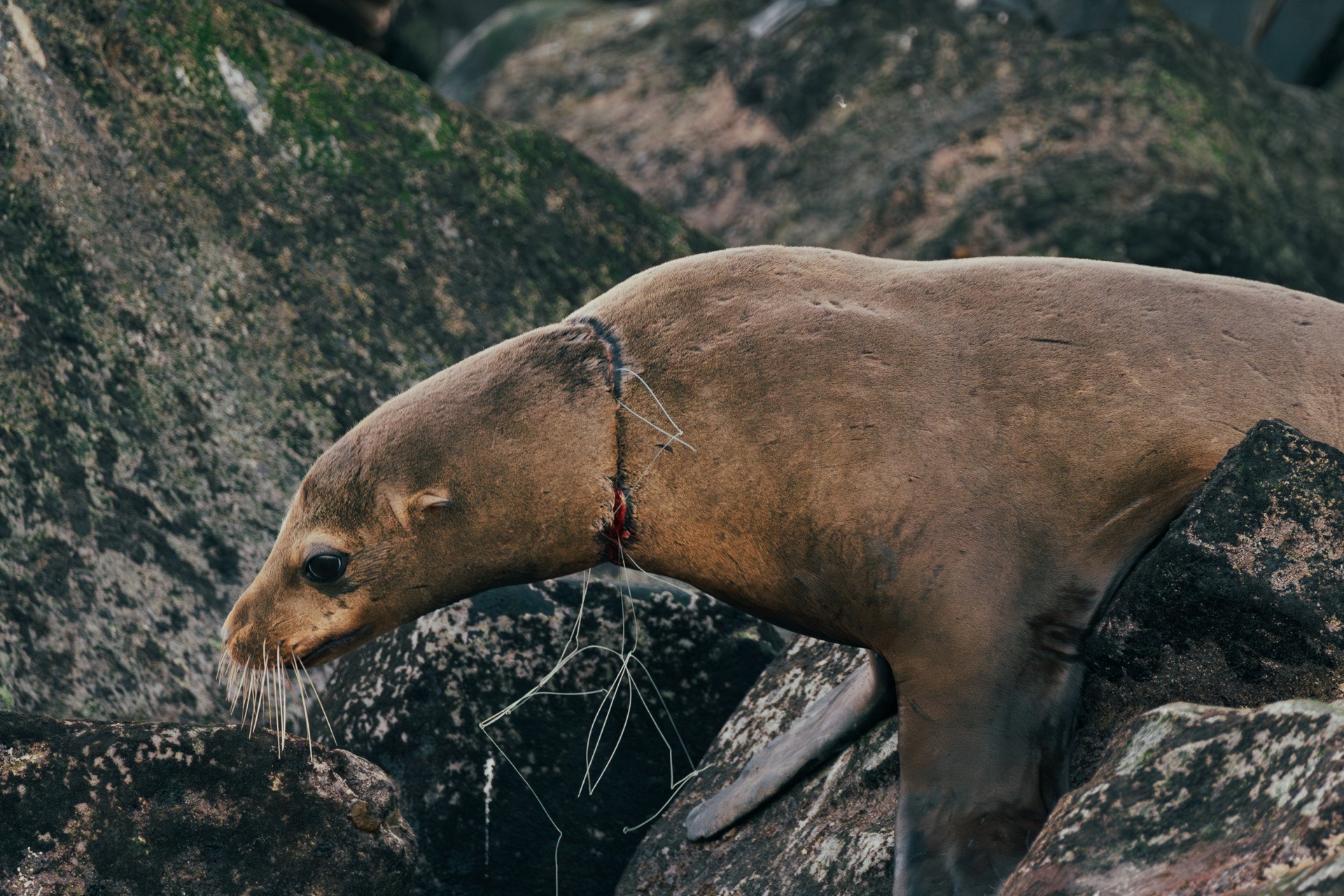
Last month our crews logged operations across two of the most threatened marine areas in North America, and the work that came out of those patrols extends well beyond the missions they were originally designed to run. In the Upper Gulf of California, the same crews who deploy daily to protect the critically endangered vaquita porpoise also conducted scheduled sea lion population monitoring, intercepted wildlife caught in abandoned fishing gear, and rescued injured pelicans tangled in discarded fishing line. In the Gulf of Mexico, crews aboard the M/V Sharkwater patrolled Alacranes (Scorpion) Reef National Park while simultaneously running a sea turtle hatchling release program timed to nighttime departures, when predatory seabird activity drops to near zero and survival rates measurably increase.
These are not separate programs. They are the compounding effects of permanent presence.
Sea Shepherd has now operated continuously in the Vaquita Refuge for over a decade, and at Scorpion Reef in active partnership with Mexican federal authorities since 2024. What began as emergency interventions, deployed in response to acute threats facing single species, have matured into long term enforcement and ecosystem monitoring programs covering thousands of square kilometers of marine protected area. Last month alone, crews documented and released hundreds of animals recovered from illegal fishing gear, including approximately 230 flounder, 45 rays, and 15 houndsharks, alongside the routine work of vessel inspections, drone surveillance flights, and coordination with the Mexican Navy and national park service.
The model has proven durable because it solves the problem at the source. Illegal fishing in marine protected areas damages reef systems, seabird colonies, sea turtle nesting grounds, and pelagic species for years after a single poaching event. Removing the opportunity to operate undetected is the only intervention that scales.


The Vaquita Defense operation is no longer a short term-crisis deployment. It is a sustained operational presence designed to protect the critically endangered vaquita, deter illegal activity, defend critical habitat, and respond in real time. The same model is now taking shape at Scorpion Reef, where daily patrols, drone surveillance, and joint enforcement operations with Mexican authorities have established a continuous footprint inside one of the most biologically significant coral reef systems in the Gulf of Mexico.
That continuity is what allows secondary impact to accumulate. A vessel already on station for vaquita protection is the same vessel that responds when a sea lion colony needs a population count, when a pelican needs a hook removed, when a panga is intercepted with abandoned long lines aboard. The marginal cost of that additional work, once a ship and crew are deployed, approaches zero. The marginal benefit is measured in animals returned to the water alive.


