
News
For much of modern history, humans viewed self-awareness as a trait that separated us from the rest of the animal kingdom. Research led by Sea Shepherd board member Diana Reiss has helped steadily dismantle that idea.
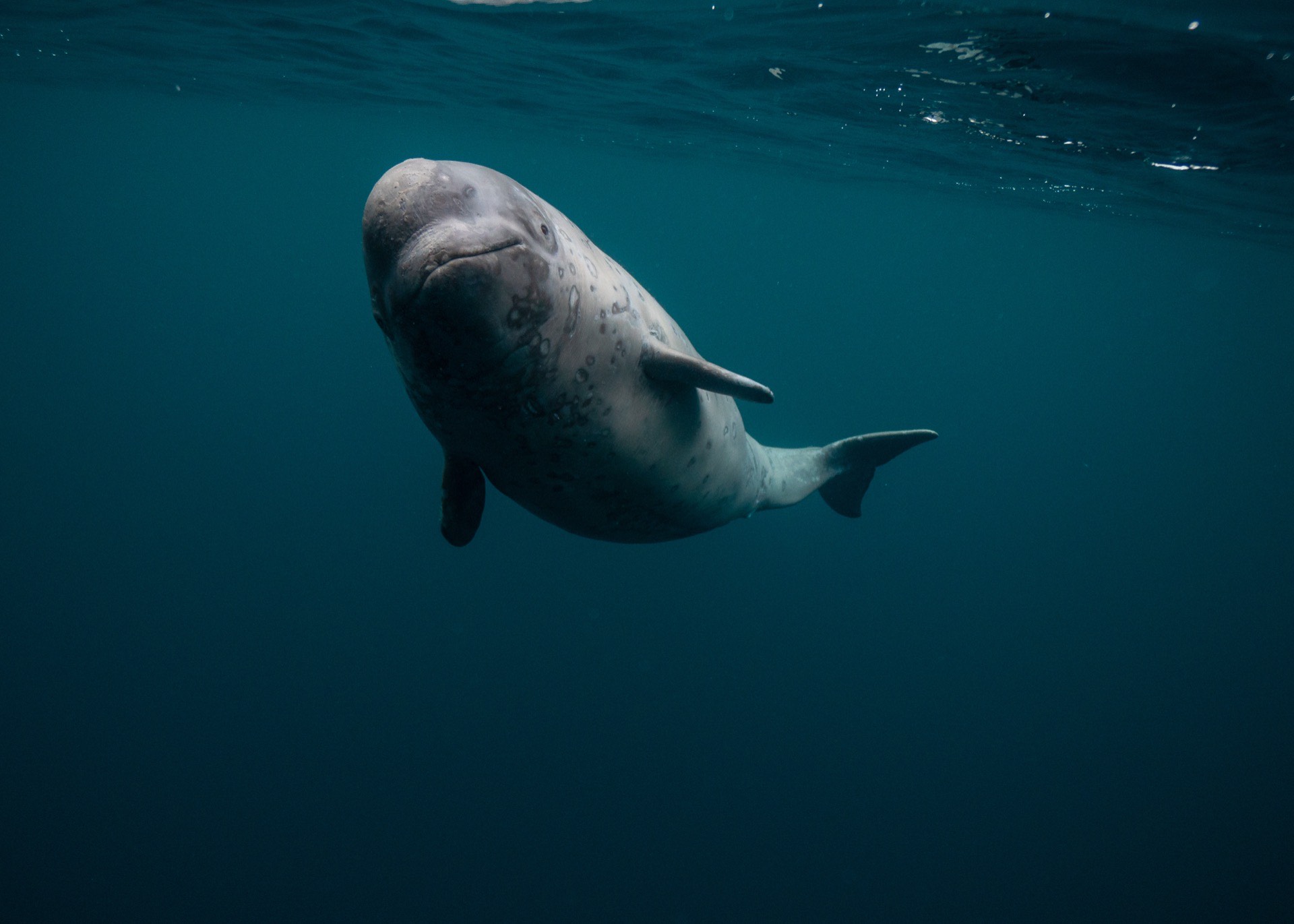
A marine mammal scientist and cognitive psychologist at Hunter College, Reiss has spent decades studying intelligence and communication in cetaceans. Her latest published research, conducted alongside former student Alexander Mildener, adds beluga whales to the small group of animals that appear capable of recognizing themselves in mirrors.
The Study
The study centered on four belugas living at the New York Aquarium.
Mirror Self-Recognition Study · New York Aquarium
Only a small number of species have demonstrated this level of cognitive behavior. Reiss and her colleagues previously conducted the studies that demonstrated mirror self-recognition in bottlenose dolphins and Asian elephants. Scientists often associate it with advanced awareness, emotional complexity, and highly social species.
Why It Matters
Sea Shepherd opposes the captivity of cetaceans. Three of the four belugas in this study were captured from the wild in Churchill, Manitoba. The fourth, a calf, was born into captivity, never knowing the open ocean her mother came from. They should never have been confined in the first place. What this research makes clear is exactly why: these are self-aware, socially complex beings whose lives matter. The findings produced in tanks are now part of the case for ensuring no more whales are taken from the wild, hunted at sea, or held in concrete pools for human entertainment.
That reality becomes impossible to ignore in places like the Faroe Islands, where entire pods of pilot whales are driven from the open ocean onto killing beaches during the grindadráp. On average, roughly one thousand pilot whales are killed there each year. These are highly social animals that remain together as family groups while the slaughter unfolds around them.
Sea Shepherd has spent years documenting these hunts, collecting evidence, exposing the scale of the killings, and building tools that increase public and law enforcement pressure around the hunts and their legality.
A Bigger Picture
Belugas, pilot whales, dolphins, and other cetaceans face growing pressure not only from direct hunts, but also from habitat destruction, ocean noise, pollution, and the collapse of marine ecosystems tied to industrial and illegal fishing operations.
Research into marine mammal cognition continues to reshape how humanity understands life in the ocean. Diana Reiss’s work adds to a growing body of evidence that whales are deeply aware animals, strengthening both the scientific and ethical case for defending them.
