
Baja California, Mexico
Twelve years ago, Sea Shepherd entered the Upper Gulf of California as part of an emergency effort to protect the vaquita porpoise, the world's most endangered marine mammal. From the beginning, the greatest threat was clear: fishing nets. Gillnets set for fish and totoaba can entangle and kill vaquita, along with sea lions, dolphins, sharks, turtles and other wildlife that share these waters.
For more than a decade, Sea Shepherd crews have worked alongside the Government of Mexico and other partners to locate and remove illegal, unreported and unregulated fishing gear from the Vaquita Refuge and surrounding waters. Removing a net from the sea, however, is only the beginning of its journey.
Upper Gulf of California · Removing the Nets
When illegal fishing gear is confiscated, it becomes evidence and must remain in government custody while the appropriate legal process is completed. Once that process is finished, the nets can be destroyed so they can never return to the water.
The Next Problem
Beyond the Grinder
Sea Shepherd helped provide the industrial net grinder used for that work with support from Re:wild and Leonardo DiCaprio. For years, that solved one critical problem by permanently taking the nets out of circulation. But the shredded plastic was still waste.
Beyond the Grinder · Nets Destroyed
For the last few years, Sea Shepherd has been working to solve that next problem: what happens after a dangerous net has been removed from the ocean, processed as evidence and destroyed?
By late 2024, that effort included direct work with Bureo, an organization that had already spent years developing systems to collect and recycle fishing gear in Mexico and other parts of the world. The challenge was whether that experience could help create a productive pathway for the confiscated fishing gear coming out of the Upper Gulf.
Bureo and REAM
Building a Recycling Pathway
It was not as simple as putting shredded nets into a recycling bin. Fishing gear is designed to survive harsh conditions, and after prolonged exposure to sunlight, saltwater and the marine environment, the material can be difficult to process. Monofilament gillnets present additional challenges. They tangle easily, behave differently from many conventional plastic waste streams and require the right equipment and material mix to become something useful again.
Baja California Sur · Processing the Material
There is also a logistical challenge unique to confiscated gear. Before any of it can enter a recycling stream, it has to complete the legal chain of custody required for evidence. Solving the problem required expertise beyond the work happening at sea.
Bureo and the Global Ghost Gear Initiative worked with REAM in Baja California Sur to test ways of processing the material. After months of experimentation, REAM developed a process that could incorporate plastic recovered from fishing nets with other recycled plastics to create durable posts. For the first time, some of the material Sea Shepherd and its partners had spent years working to remove from the ocean had a pathway beyond the grinder.
Watch Inside the effort to give recovered fishing gear a second life.
La Paz, Baja California Sur
A Second Life on Shore
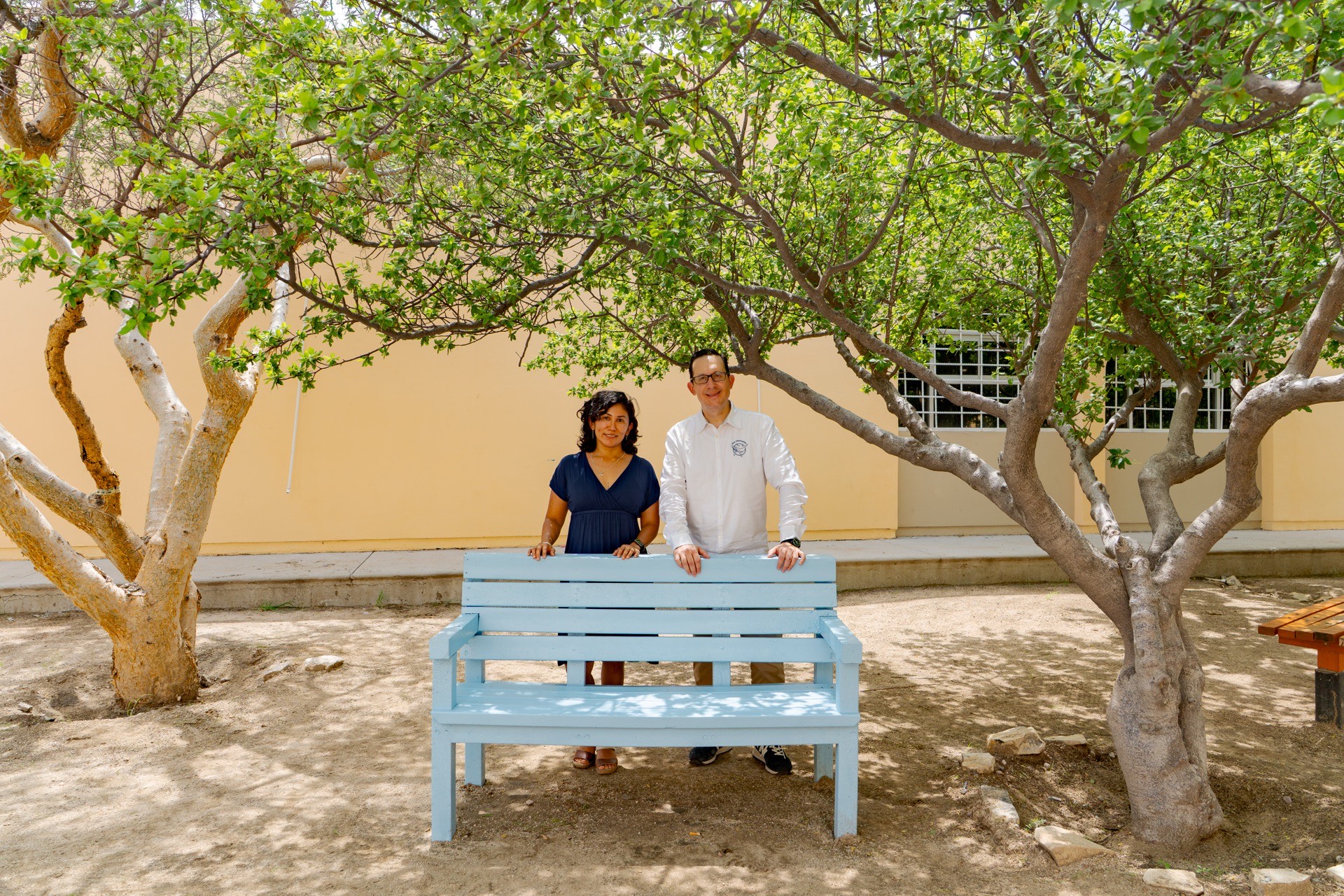
On September 10, Sea Shepherd donated three benches to the Universidad Autónoma de Baja California Sur in La Paz. Produced by the local organization Urbaneria, they were built using recycled plastic posts incorporating material recovered from fishing nets in the Upper Gulf of California.
La Paz · The Bench Donation
The benches represent proof that a pathway exists. The next challenge is making that pathway work at a larger scale and closer to where the material is recovered. Confiscated fishing gear still has to move through legal proceedings, transportation, sorting and specialized recycling before it can be reused. Building more of that capacity near affected coastal communities would make it easier to keep recovered material out of landfills and return it to productive use.
That means improving the process, finding additional uses for the material and developing a more local recycling system over time.
Sea Shepherd's immediate mission remains keeping dangerous fishing gear out of the ocean. The longer term opportunity is to help build a system where recovery is only the first step and the material itself can stay in the region, creating something useful for the communities connected to these waters.
