
This August, the M/V Sharkwater is at Scorpion Reef. Sea Shepherd has always been most effective when we put ourselves where change needs to happen, and on the water that means ships, crews and a persistent presence in places where wildlife and protected areas are under pressure.
Yucatan, Mexico
On the Water at Scorpion Reef
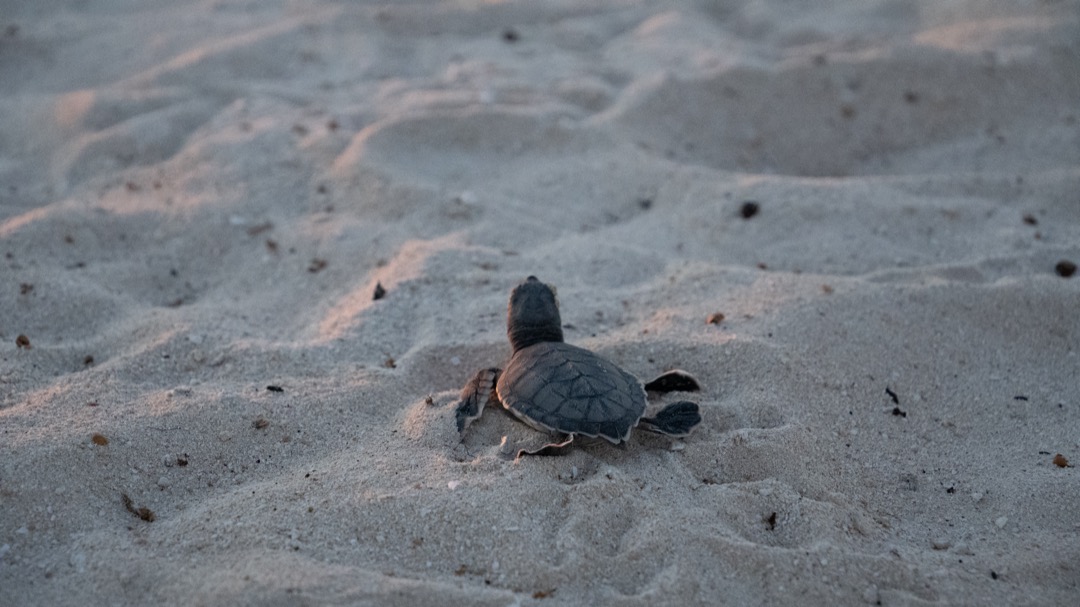
August falls in the middle of peak visitor season at Scorpion Reef and within sea turtle nesting season. More boats, divers and tourists are moving through the national park at the same time turtles are nesting on its islands and using the surrounding waters.
The Sharkwater and our crew are there throughout this period, working alongside Mexican conservation authorities to maintain a presence across the protected area. Patrols are paired with work below the surface, where the team is documenting sea turtles, monitoring coral health and surveying queen conch populations.
Scorpion Reef · Above and Below the Surface
This is what Sea Shepherd can bring to a protected area: a ship that stays on station, crews capable of working above and below the surface, and the ability to keep watching when pressure on an ecosystem increases. Protection is not simply a designation on a map. It has to mean something on the water.
That work is also giving us a clearer picture of the reef itself. Seeing turtles moving through these waters, examining the condition of the coral, and determining whether mature queen conch exist in sufficient numbers and proximity to reproduce all help us understand whether this ecosystem can continue to sustain the wildlife that depends on it.
Toronto, Canada
Taking the Mission Ashore
Sea Shepherd's work does not end when our crews come back to port. Earlier this month in Toronto, supporters and volunteers gathered with Sea Shepherd to hear directly from Antarctic Campaign Director Casson Trenor about another fight now gaining momentum: removing krill products from store shelves.
Ashore · Supporters and Volunteers
The campaign is already producing results. Retailers across Europe are moving away from krill products. Each decision reduces the market for an industry built on extracting one of the foundations of the Antarctic food web.

That follows the same principle that drives our work at sea. Sea Shepherd goes where we can apply pressure and create measurable change. In Antarctica, one of the most powerful places to apply that pressure is not only on the water. It is at the point of sale.
Krill-Free Toolkit
We Need the United States and Canada to Move
Europe and Australia are beginning to show what sustained consumer pressure can accomplish. The United States and Canada are not there yet, and this is where everyone reading this update can become part of the mission.
Our Krill-Free Toolkit makes it easy to identify retailers that are still selling krill products and send them a letter asking them to stop. The goal right now is straightforward: get as many of those letters into the hands of retailers as possible.

Retailers pay attention when customers tell them that a product affects where they choose to spend their money. Every letter adds pressure, and enough pressure can turn krill from an easy product to carry into something companies would rather take off their shelves.
Sea Shepherd can put ships and crews on the front lines, but this is a front line our supporters can reach themselves. If you are in the United States or Canada, use the toolkit, choose a retailer selling krill, and send them a letter. Help us make the market for Antarctic krill smaller, one company at a time.
